

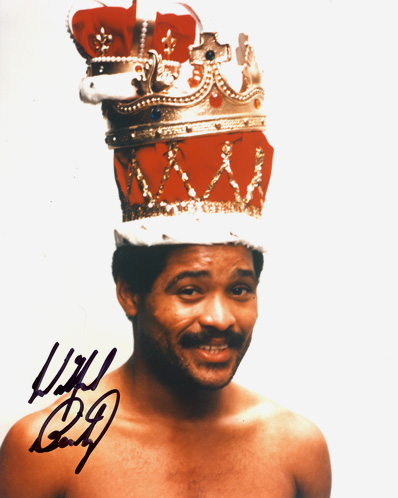
In the my years covering boxing, I’ve never nor will I ever refer to any prizefighter as a coward. It’s a word that cannot come into my lexicon after seeing the physical and emotional pain they have to put themselves through. Another reason is the ever-present risk of permanent damage a fighter faces every time they step in the ring. One such example of this reality is former champion Wilfred Benitez.
Benitez was a boxing prodigy, turning pro at an amazing 14 years old and winning his first title at 17 against future Hall of Famer Antonio Cervantes. He would later face the best fighters of his era in Sugar Ray Leonard, Roberto Duran and Tommy Hearns. While renowned as a defensive wizard, Benitez began to slip and receive more and more punishment in his later years. Those bouts would lead to him being diagnosed with a degenerative brain disease named traumatic encephalopathy, prompted by the repeated head trauma he took as a boxer.
At 52, he is cared for today by his older sister Yvonne, and survives on a $250 per month pension from the WBC, and a $14,000 annual stipend from Puerto Rico’s government. The millions he made in the ring as a fighter, whether through bad spending habits or shady dealings, are long gone.
His condition was further profiled last week in an investigative piece by AOL Fanhouse, which further describes Benitez’s day-to-day condition.

Fighters can be many things: arrogant, opportunistic, funny, prideful, greedy, and numerous other colorful adjectives. But when you watch them from the comfort of your flat screen, or even from the stands of an event, remember that the same brain you use to understand your world, is being smashed around the inside of their skulls. Remember that win, lose or draw, long after you’ve moved on to critique the next fight, they often limp and grimace around their homes carrying battle scars for weeks, months, and even years. And in some cases, scars that never heal.
Other sports use deceptive language to paint their professions as life and death struggles or epic battles. We, as followers of boxing, don’t require such hyperbole. We need only to look at our faded warriors to verify the pound of flesh our sport requires of its men and women. And it’s a painful, sobering lesson that should never be downplayed or forgotten.
Vodpod videos no longer available.

 Beats, Boxing and Mayhem