

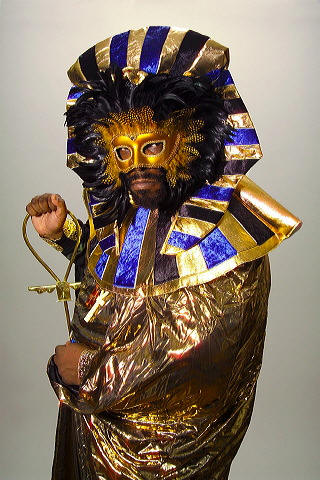
Hip-Hop pioneer Afrika Bambaataa is troubled by how Hip-Hop music is presented on the radio.
The Zulu Nation founder was one of the early proponents of viewing Hip-Hop as a culture that manifests in various artistic expressions like music, breaking (dancing) and visual art.
He is concerned that this viewpoint has been diluted by radio program directors who chose to utilize repetitive playlists that don’t reflect the versatility of the music.
“What worries me are these so-called radio stations with program directors who don’t play all the different flavors of Hip-Hop. They should play the old with the new, 24/7, 365 days a year. A lot of these program directors are just jiving around and not playing all the good music for the people,” Bambaataa explained to the Huffington Post. “A lot of times, when people say Hip-Hop, they don’t know what they’re talking about. They just think of the rappers. When you talk about Hip-hop, you’re talking about the whole culture and movement. You have to take the whole culture for what it is. ”
Bambaataa’s Universal Zulu Nation is recognized at the first Hip-Hop organization due to its founding in 1973. He is responsible for several landmark early singles in Hip-Hop history including “Planet Rock,” “Looking for the Perfect Beat,” and “Renegades of Funk.” His sampling of electronic groups like Kraftwerk lead to the creation of electro funk and eventually a song collaboration with James Brown in 1984 called “Unity.”
It bothers Bambaataa that many Hip-Hop practitioners today do not know the history of the genre nor care to seek it out.
“It’s very frustrating, because many people who keep claiming ‘I’m Hip-Hop’ don’t really know jack-crap about Hip-Hop,” he said. “They’re just following what they see on MTV or what they’ve read in some magazine. But they never come back to the architecture of hip-hop and the pioneers of Hip-Hop.”
Afrika Bambaataa is still active on the DJ front. Last week, he performed at NYC’s HighBar for the Manchester City Football Club.
****************************************************************
Bambaata’s viewpoint is not without merit. Over the past month I’ve went on several road trips up and down the East Coast. Even going through several states I heard the same 7-10 songs on every station. And that small group of songs were all similar to each other. To say it was horrible would be a gross understatement.
But even so, the “keepers of the culture” are always going to be small in number. The reality is most people do not care to engross themselves in music or anything else for that matter. It is up to those who are passionate and love the art form to make sure they record the history as it should be . So years from now when people look back and wonder what we were doing musically, they’ll be able to have a stronger reference point than Soulja Boy and the other radio artists.
Even back in the “good ol’ days” it was no different. Whether you look at the Bebop jazz artists in the 1940s or the great funk groups of the 70s, most of them were not killing the charts. Their talent was revered by a select few, and then much later after their heyday the mainstream praise started coming in.
So Bambaataa should not fret. Expecting mainstream radio to represent Hip-Hop culture is downright laughable. But for those who have the desire to learn, the deep history of this culture is a mere few clicks away on the Internet. Hell, if Soulja Boy can start listening to Nas and doing his homework, there’s hope for everyone.

 Beats, Boxing and Mayhem
Good Article, I’m glad you shared this